Summer is quiet on campus and loud in most marketing calendars. At faith-based and independent schools where the principal handles content alongside everything else, the choice each summer is almost always the same: burn out trying to keep up week by week, or spend two focused weeks in June building a content bank that carries the school through the next six months. The second option is a real job. It is also the only sustainable one.
This guide is for a principal at a 150-200 student faith-based or independent K-8 school with a marketing budget of $25,000-$50,000 and no dedicated content team. It covers why summer is actually the best window to produce content, the types of posts that work for back-to-school and fall enrollment season, a framework for evergreen content that earns traffic year-round, how to batch video and photography alongside writing, how to use AI tools without losing the school's voice, a 12-week editorial calendar template, the SEO priorities that matter for school content, and the mistakes that quietly sabotage most school content programs.

Written By: Adam Bennett | May 07, 2026
Adam is the president and founder of Cube Creative Design and specializes in private school marketing. Since starting the business in 2005, he has created individual relationships with clients in Western North Carolina and across the United States. He places great value on the needs, expectations, and goals of the client.
If you run a small faith-based or private school and your marketing budget is somewhere south of $15,000 a year, most "visual identity" advice is written for somebody else. It assumes you have a brand manager, a design team, and a budget for a national agency engagement. You do not. You have a spare hour on Thursday after the faculty meeting, a Canva subscription somebody set up two years ago, and a logo file whose origin you have forgotten.
This guide is for the principal who is doing the marketing alongside everything else at a 150-250 student faith-based K-12 with tuition in the $3,000-$5,000 range and a marketing budget of $5,000-$15,000. It covers the essential components of a school visual identity, why visual consistency matters even more for small budget schools than big ones, the minimum viable brand system you can actually ship this summer, the DIY tools that close most of the design-skill gap, how to handle faith-based imagery, when it makes sense to hire a designer, and how to keep the identity consistent after the summer project ends.
Written By: Adam Bennett | May 07, 2026
Adam is the president and founder of Cube Creative Design and specializes in private school marketing. Since starting the business in 2005, he has created individual relationships with clients in Western North Carolina and across the United States. He places great value on the needs, expectations, and goals of the client.
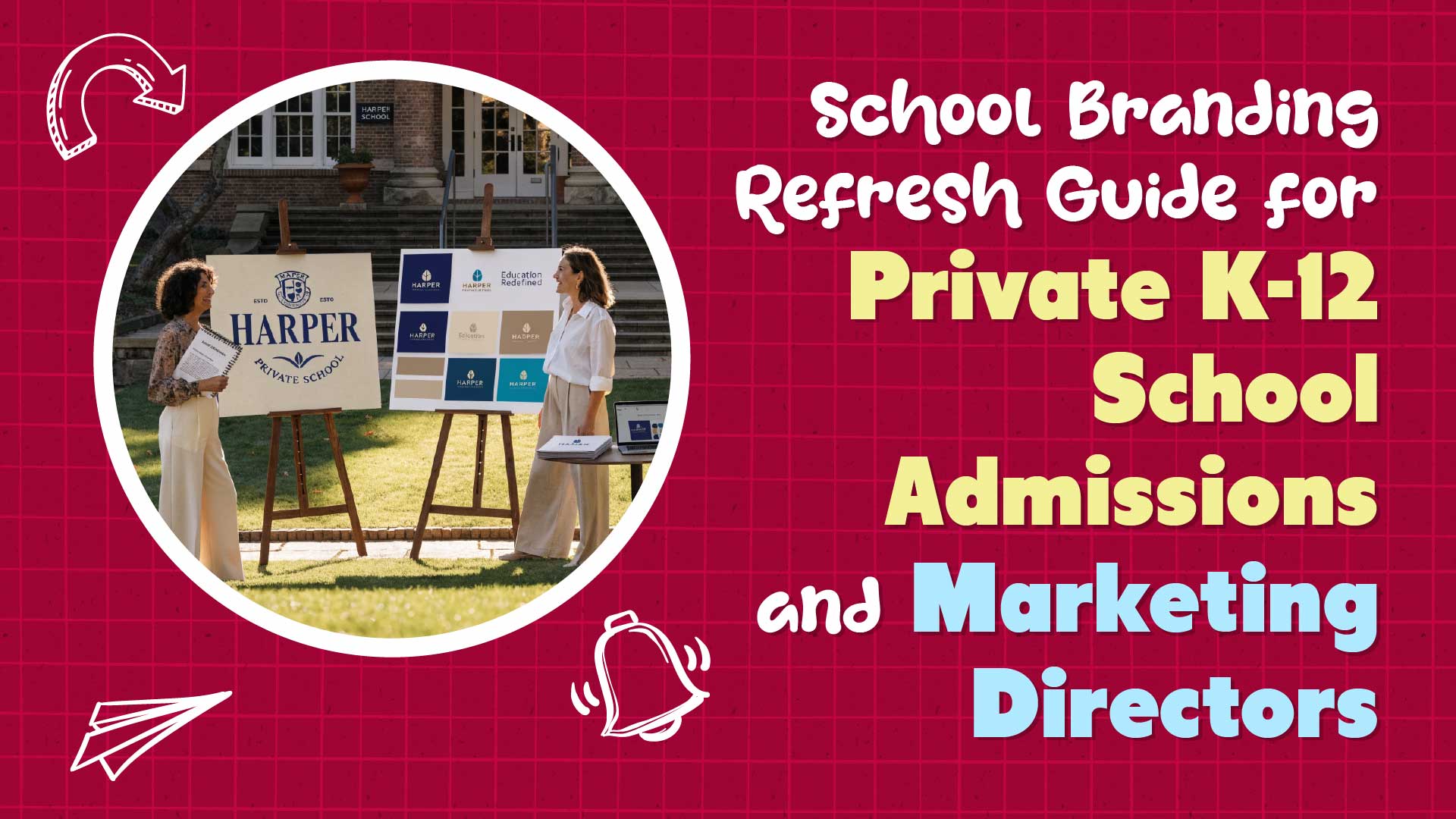
Every five to seven years, a private school looks at its logo, realizes the serifs are doing nothing for it on Instagram, and quietly starts the rumor of a brand refresh. Three months later, that rumor has turned into a forty-person committee, two dozen competing color palettes, and a Head of School who never again wants to hear the word "discovery session." The brand projects that actually ship on time at independent schools share a different trait: tight governance, a clear scope, and a leader who can say "no, we're not doing that right now."
This guide is the playbook for a Director of Admissions and Marketing at a 400-800 student college-prep school with tuition between $18,000 and $35,000 and a marketing budget of $50,000-$250,000. It covers the decision criteria for refresh versus full rebrand versus rename, the full brand stack that needs to align, the phased timeline for a summer project, stakeholder governance, realistic budget tiers, named case studies of schools that did this well, current K-12 visual identity trends, messaging principles, how to measure ROI, and the pitfalls that kill most school brand projects. It is written to get you the project you want without sacrificing the community trust you already have.
Written By: Adam Bennett | May 07, 2026
Adam is the president and founder of Cube Creative Design and specializes in private school marketing. Since starting the business in 2005, he has created individual relationships with clients in Western North Carolina and across the United States. He places great value on the needs, expectations, and goals of the client.
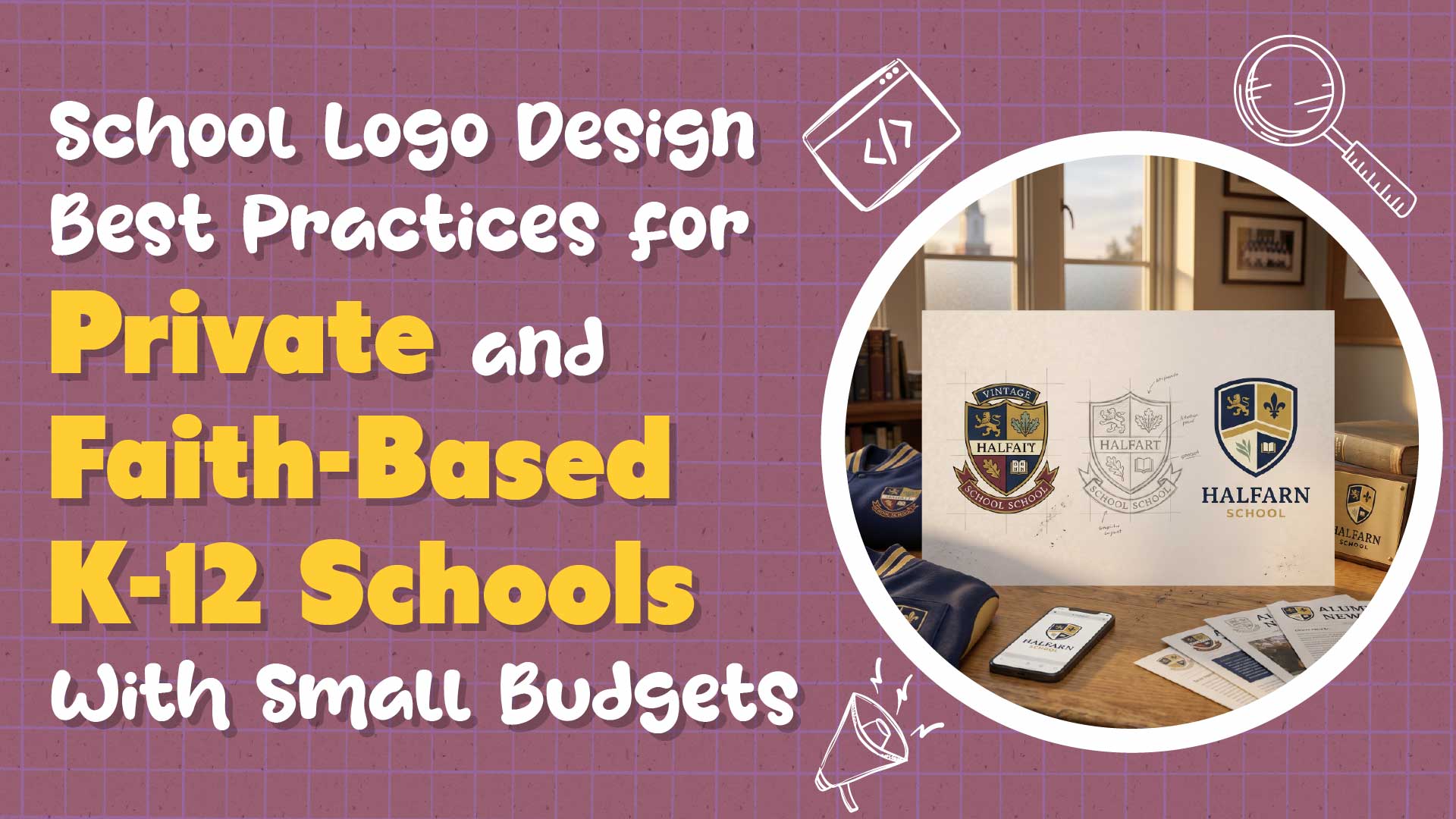
Your logo shows up on jerseys, report cards, the sign at the school entrance, every Facebook post, every parent newsletter, and the chest of a graduate's sweatshirt twenty years after they left. A good school logo is the smallest piece of your marketing and the one that travels the furthest. A bad one is a scar you see every time you pull into the parking lot. For faith-based and independent schools without a big budget, getting the logo right is the single highest-leverage brand decision available.
This guide is written for a principal at a 150-250 student faith-based or independent K-12 school with tuition around $3,000-$5,000 and a marketing budget of $5,000-$15,000. It covers the main types of school logos, the principles that separate a logo that ages well from one that has to be replaced in five years, how to handle a legacy crest or outdated mascot, the file deliverables you actually need, the cost range for getting it done professionally, the mistakes that small schools make most often, the trademark and legal basics, and how to roll out a new logo without a community revolt.
Written By: Adam Bennett | May 07, 2026
Adam is the president and founder of Cube Creative Design and specializes in private school marketing. Since starting the business in 2005, he has created individual relationships with clients in Western North Carolina and across the United States. He places great value on the needs, expectations, and goals of the client.