Most school marketing spends money to drive more traffic. More clicks, more visitors, more impressions. But here's the uncomfortable truth: traffic alone doesn't fill seats. If you can't see who is behind those visits or what they're actually researching on your site, you're leaving enrollment on the table.
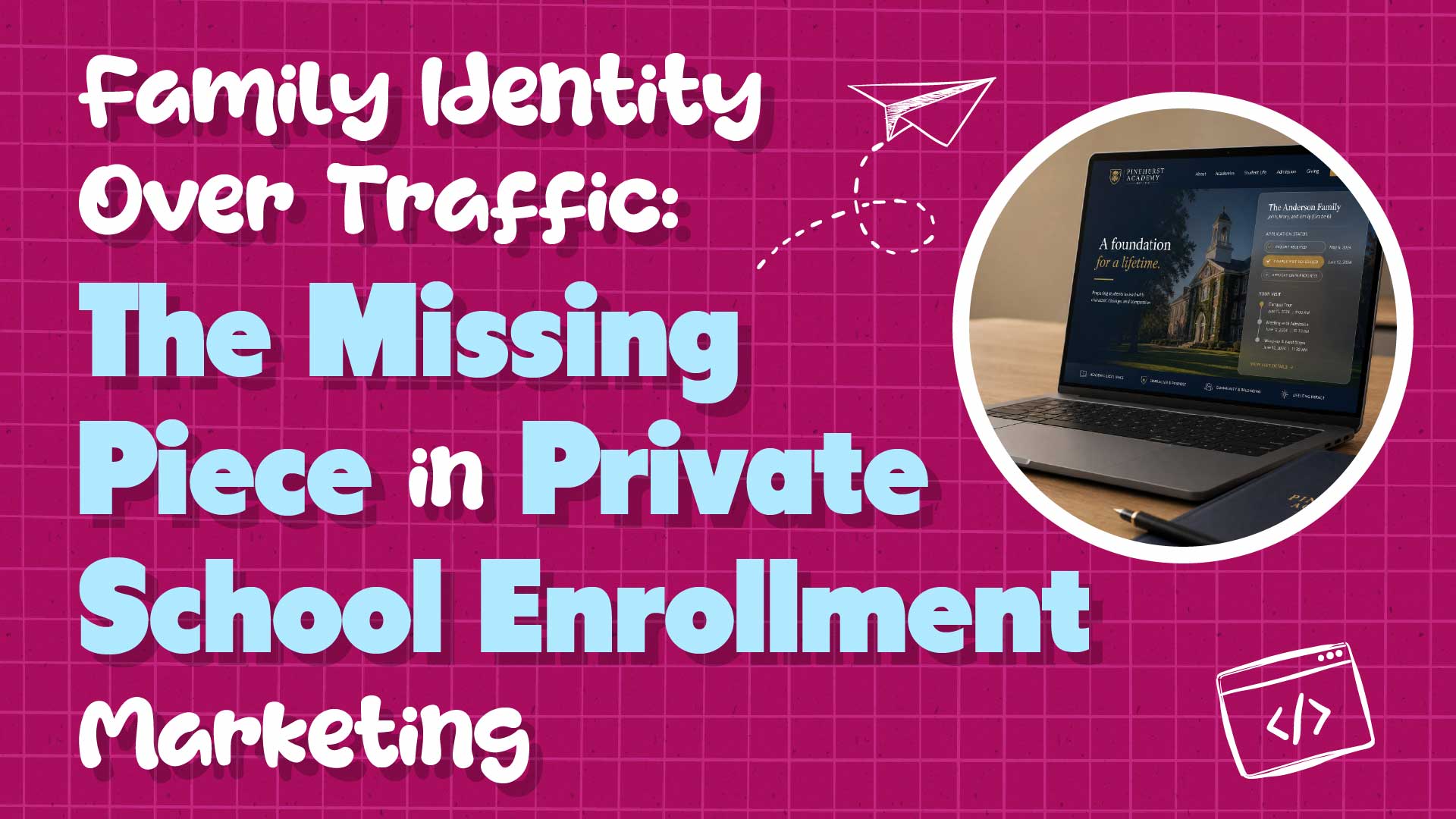
An identity-first approach changes that equation. Instead of counting anonymous visitors, you identify families at the household level, enrich that data with demographic context, and track what they're actually researching across multiple visits. That's when your website stops being a traffic report and becomes an enrollment intelligence tool. We help private schools implement this exact system to turn traffic into qualified families ready to apply.
This isn't a replacement for your existing admissions system. It's a smarter way to power it. And it works because every meaningful interaction (pricing page, program details, financial aid information) becomes a signal you can act on immediately.

Written By: Adam Bennett | June 23, 2026
Adam is the president and founder of Cube Creative Design and specializes in private school marketing. Since starting the business in 2005, he has created individual relationships with clients in Western North Carolina and across the United States. He places great value on the needs, expectations, and goals of the client.
Most school marketing teams are measuring the wrong thing, and the Head of School's quarterly budget review is the moment that mistake finally catches up with them. Click-through rates, social impressions, and form submissions get printed out, tabbed in a folder, and walked into the conference room as proof that the marketing dollars are working. The math has a hole in it big enough to drive an admissions bus through.
Roughly 95 to 97 percent of the families who land on the school's website never fill out anything. They read the tuition page. They scroll through the financial aid FAQ. They open three program pages, compare schedules, and leave. No form, no name, no follow-up, no credit assigned to the channel that brought them in. For private school marketing teams trying to prove ROI to a CFO who already thinks the budget is too big, that missing 95 percent is not a rounding error. It is the entire conversation.
Family identification technology closes that gap, and when it is paired with a serious school marketing attribution framework, it turns a fuzzy "we got a lot of traffic this quarter" report into a defensible ROI story. The rest of this post walks through seven concrete ways that pairing changes what admissions and marketing directors can prove, in a language a board actually understands.
Written By: Adam Bennett | June 22, 2026
Adam is the president and founder of Cube Creative Design and specializes in private school marketing. Since starting the business in 2005, he has created individual relationships with clients in Western North Carolina and across the United States. He places great value on the needs, expectations, and goals of the client.
Your enrollment email strategy probably works like this: someone downloads your tuition guide on Tuesday, so your email automation sends them a welcome email on Wednesday. Three days later, a second email. Five days after that, a third.
But here's the problem: that family's real moment of interest might have been Thursday, when they spent 14 minutes on your financial aid page, then clicked through three STEM program profiles. By the time your automated third email lands, they've already moved on.
You're not actually responding to what families are doing. You're guessing when they care.
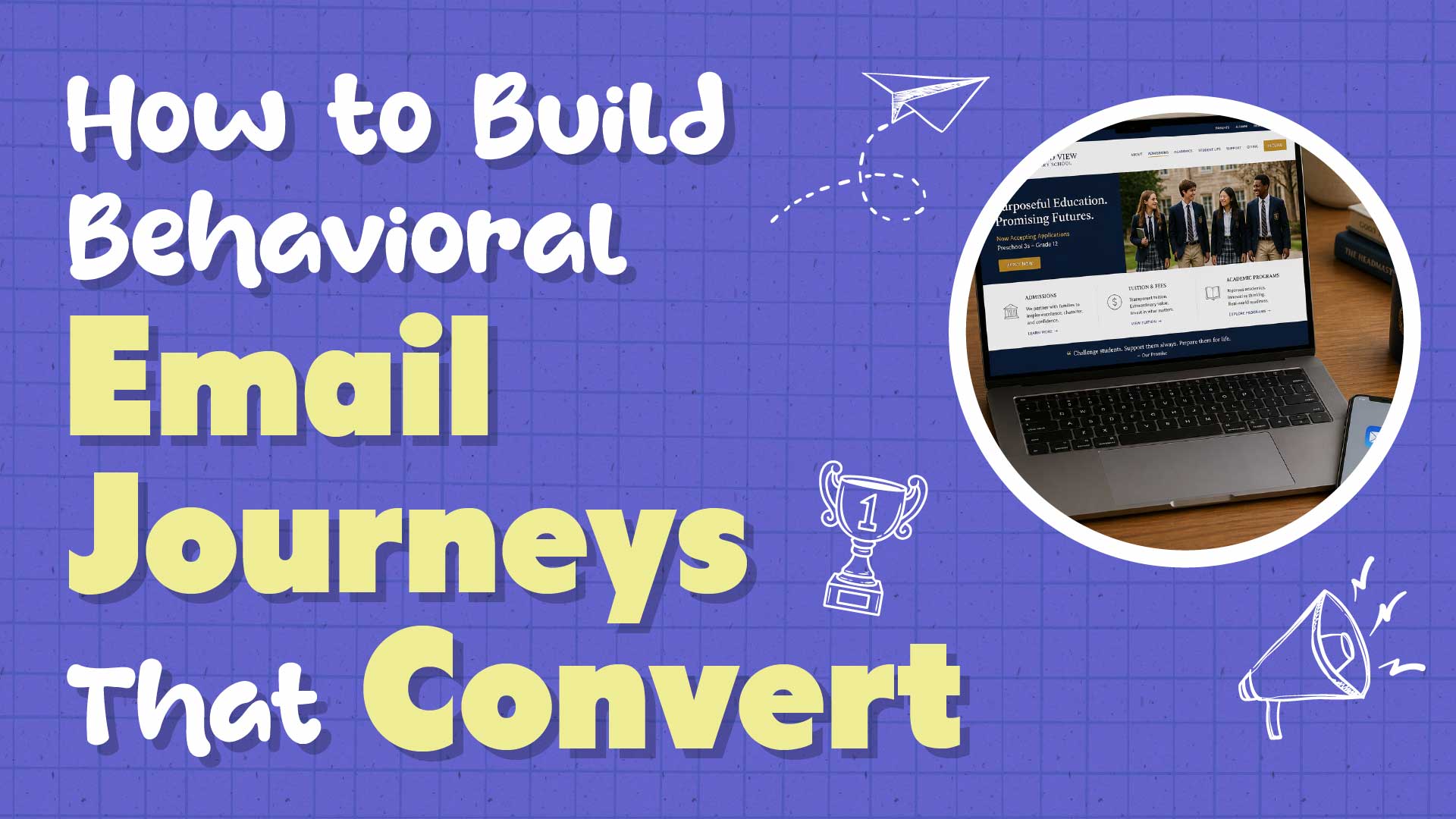
This is where behavioral triggers change everything. Instead of email timers, you're watching actual family behavior on your website. When a family hits a tuition or financial aid page for the second time in a week, an email arrives within hours; at the exact moment interest is hot. When a visitor clusters around STEM or athletics content, you send a program-specific nurture sequence. When a past prospect suddenly returns to your site, you reach out while they're actively considering your school again.
This approach works for private school marketing because it replaces guesswork with precision. You're not hoping someone is ready. You're responding to evidence that they are.
Written By: Adam Bennett | June 19, 2026
Adam is the president and founder of Cube Creative Design and specializes in private school marketing. Since starting the business in 2005, he has created individual relationships with clients in Western North Carolina and across the United States. He places great value on the needs, expectations, and goals of the client.
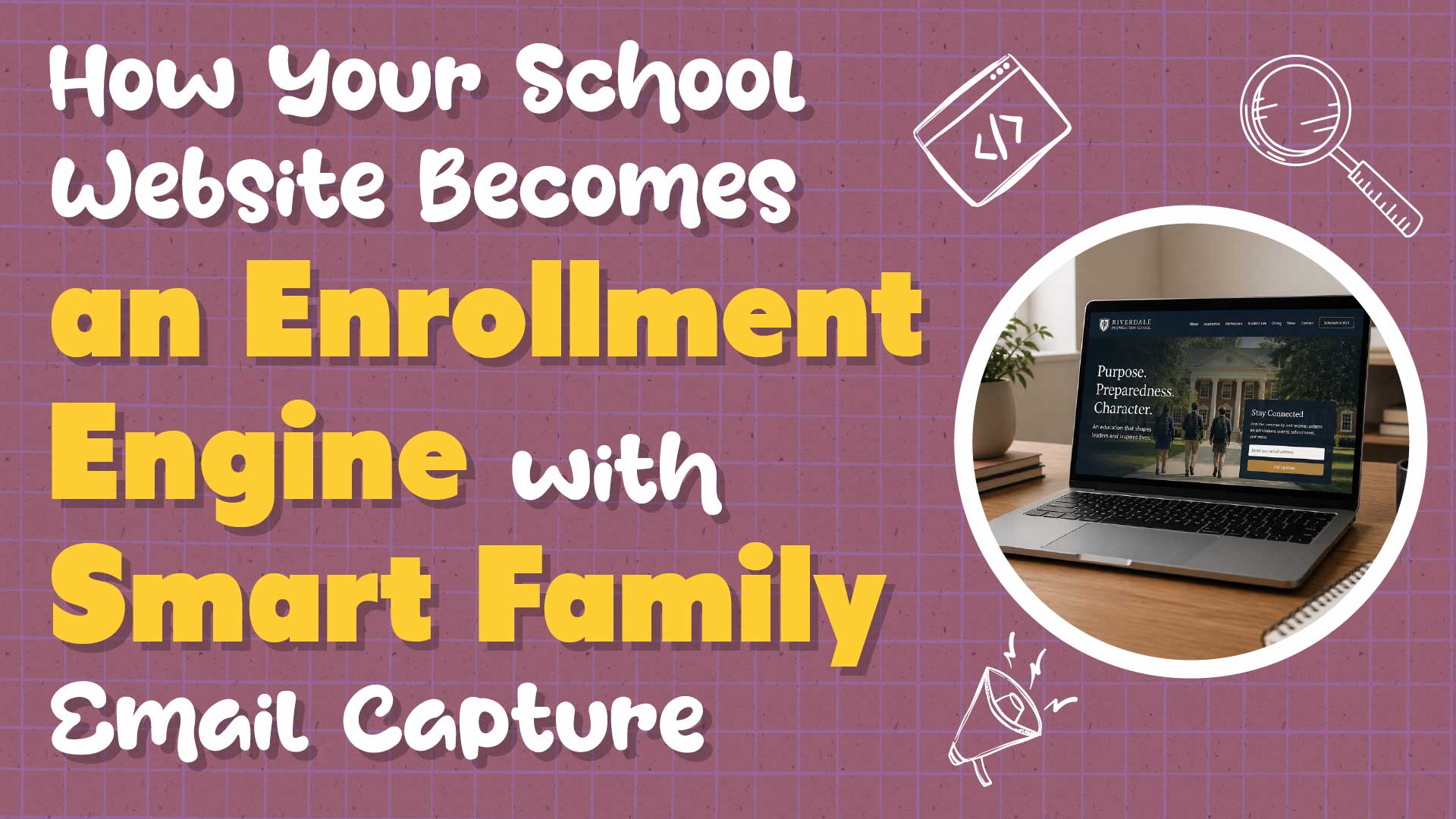
Your school website probably collects email addresses the way most websites do: a footer form that nobody notices, maybe a modal pop-up that appears at an awkward moment, and that's it. Then you wonder why your prospective family list grows at a crawl, and the families you do capture seem uninterested.
Here's the uncomfortable truth: you're not missing families. Your website is simply treating email capture as an afterthought instead of designing it as a system. When you build your website to actively identify high-intent visitors and invite them in with relevant offers, everything changes. You stop waiting for families to stumble onto your contact form and start turning qualified traffic into subscribers your admissions team can actually use.
you visit? Email
This isn't about bombardment or being pushy. It's about recognizing that private schools often leave massive opportunity on the table; families are already on your site, already interested, already telling you through their behavior exactly what matters to them. You just need to ask for the relationship at the right moment.
Written By: Adam Bennett | June 18, 2026
Adam is the president and founder of Cube Creative Design and specializes in private school marketing. Since starting the business in 2005, he has created individual relationships with clients in Western North Carolina and across the United States. He places great value on the needs, expectations, and goals of the client.