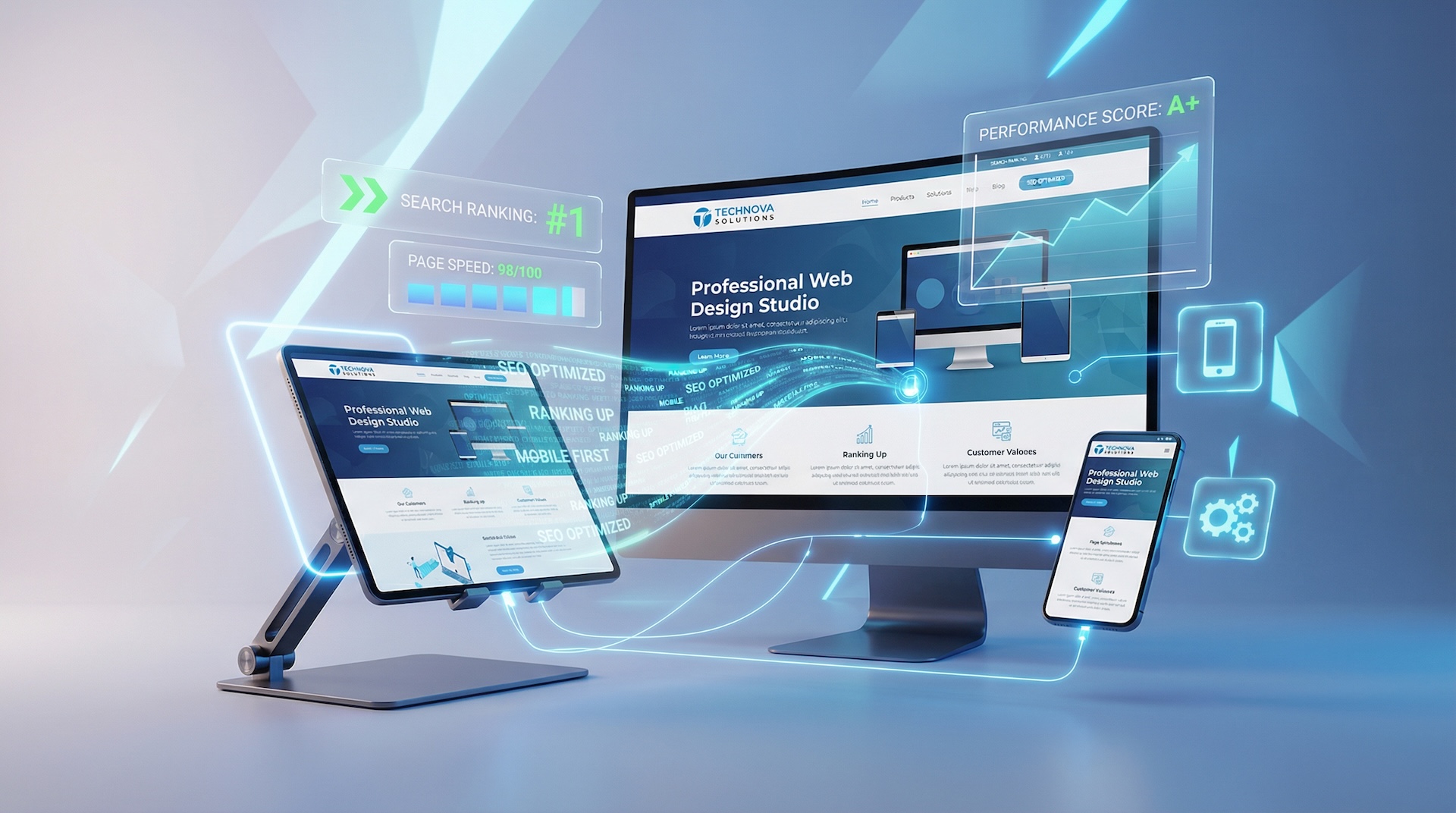
People don't use the internet the same way they used to. Nowadays, most online traffic is from mobile devices, and people expect websites to change right away based on their screens. People quickly leave any website that is hard to access, loads slowly, needs zooming, or breaks visually on smaller devices. Search engines pick up that action.
Web design that adapts to different screen sizes is no longer seen as an option but as a key element of search engine optimization strategies.
A website that changes easily on different devices gives people a better experience, keeps them interested longer, and helps search engines understand the content better. Because of this, responsive websites often have better Google rankings, more sales, and more trust.
Website design that adapts across devices isn’t just a user benefit; it also aligns with search engine algorithms, improving both trust and rankings. Search engines care about user experience, and adaptable design is an important part of that.

Innovation doesn't always mean launching something new. Often, it means seeing your existing business differently — reshaping how value is created, delivered, or captured. That kind of shift doesn’t require massive investment; it requires perspective.
When you pause to transform your business model, you're not chasing trends — you're recalibrating for survival. Maybe your product stays the same, but the way it's offered changes: subscription instead of one-time, bundled instead of single-sale, localized instead of broad. Or maybe it’s your margins, your packaging, your partners. Look at where friction lives and build from there.
This isn’t theoretical. It’s cash flow, customer clarity, and competitive pressure — real constraints that force real moves. And the most sustainable innovations? They often start with subtracting, not adding.

Commercial pest control deals can take many months if not years to pay off. They are normally not one time visits. Many teams have the issue of losing leads when they get in contact for the first time, and end up forgetting to respond back. A simple system can be used to fix this, but requires discipline nevertheless. You should capture every inquiry that comes in, respond fast, and work older inquiries/quotes each week. This habit can help turn forgotten prospects into first-meetings, scheduled walkthroughs, and create new contracts.

You're manually copying inquiry emails into a spreadsheet at 9 PM on a Tuesday. You're posting to Instagram one photo at a time while simultaneously responding to parent emails and planning next week's open house. Meanwhile, you're watching your competitors' k-12 private schools seemingly nurture hundreds of prospects effortlessly while their marketing directors leave at 5 PM.
The difference? They've invested in the right marketing technology stack.
Here's what's changed: AI tools have democratized content creation (what took four hours now takes 20 minutes). Marketing automation platforms do the work of two to three full-time staff members. Analytics provide insights that previously required expensive consultants. Video editing software enables professional in-house production.
But here's the trap nobody talks about: buying every shiny tool creates chaos, not efficiency. The real strategy is building an integrated stack that:
- Automates genuinely repetitive tasks (not just adds another login)
- Scales your human capacity without replacing human judgment
- Provides data-driven insights you'll actually use
- Fits your budget constraints without requiring venture capital
This guide cuts through vendor marketing speak to deliver honest platform comparisons, transparent pricing (no "contact us for a quote" nonsense), and a decision framework for building your optimal technology stack based on your school's actual size and budget reality.

Written By: Adam Bennett | December 17, 2025
Adam is the president and founder of Cube Creative Design and specializes in private school marketing. Since starting the business in 2005, he has created individual relationships with clients in Western North Carolina and across the United States. He places great value on the needs, expectations, and goals of the client.