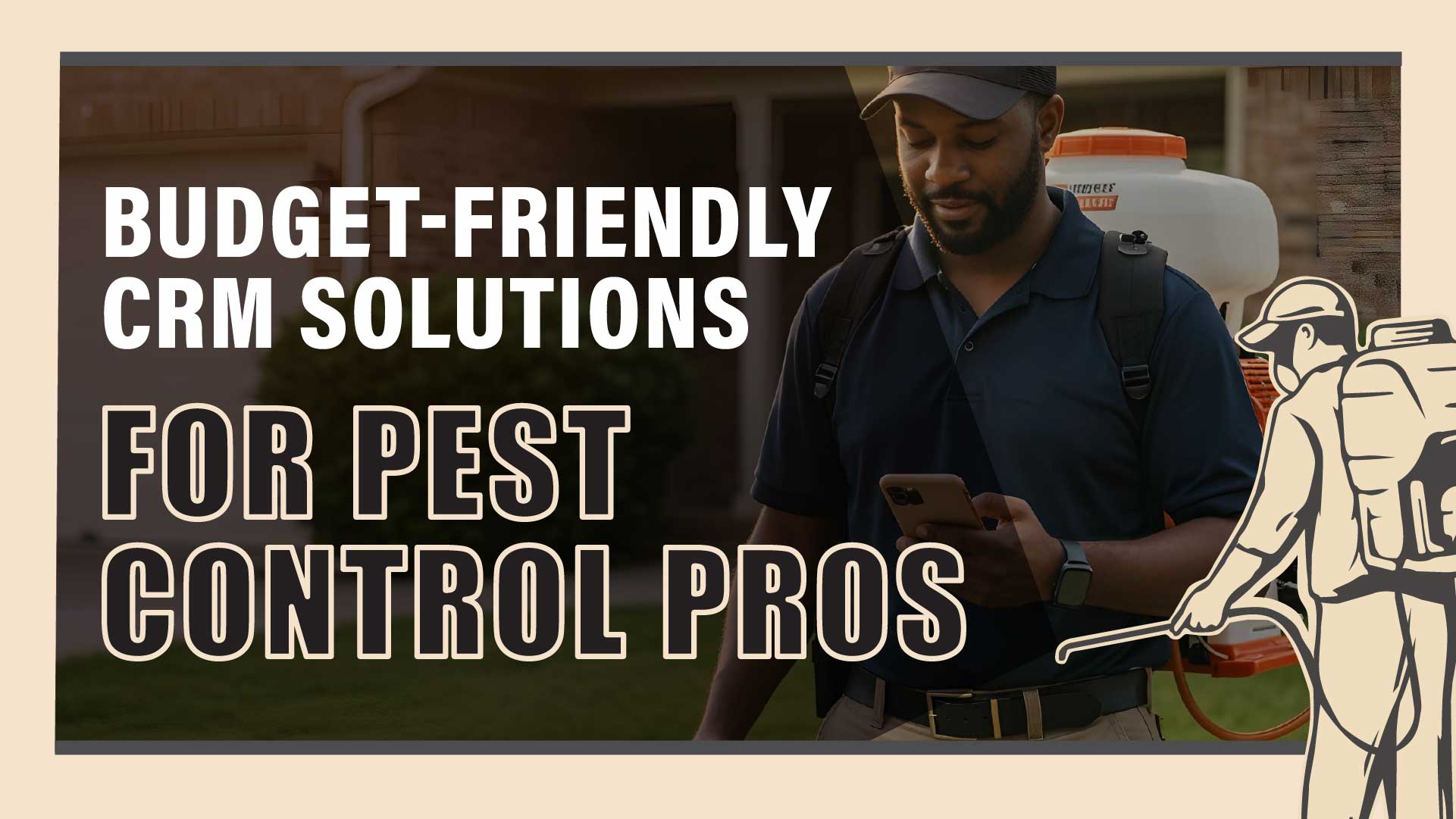
Running a pest control business can feel like a never-ending game of whack-a-mole—following up with customers, managing billing, and still finding time to tackle the pests themselves. With the right customer relationship management (CRM) platform for your pest control business, you can change the way you manage customer interactions. When customer information is at your fingertips with automated processes and seamless communication, you can focus on what you do best—eliminating pests.
The pest control industry is booming! Industry revenue has grown at a CAGR of 3.3% over the past five years, reaching an estimated $24.2 billion in 2024. (Source: IBISWorld) To capture your share of this market, you need technology that helps you stand out from competitors while making your day-to-day operations smoother.
In this guide, we'll explore how to select the perfect CRM for your pest control business, with special attention to using HubSpot to enhance your marketing efforts and customer relationships. Let's exterminate those operational inefficiencies once and for all!

Written By: Chad J. Treadway | June 09, 2025
Chad is a Partner and our Chief Smarketing Officer. He will help you survey your small business needs, educating you on your options before suggesting any solution. Chad is passionate about rural marketing in the United States and North Carolina. He also has several certifications through HubSpot to better assist you with your internet and inbound marketing.
Are your technicians spending more time battling traffic than bugs? If your routing strategy still involves pushing pins into maps or scribbling notes on whiteboards, you might be watching profits crawl away one mile at a time.
In the pest control industry, time truly is money. Every minute your technicians spend driving between jobs represents a lost opportunity and increased expenses. In the past, companies plotted routes manually, often pushing pins into maps on walls. Today, many use routing software and electronic optimization tools to make routes as efficient as possible. The difference between these approaches can mean thousands of dollars to your pest control marketing bottom line.
Let's exterminate those inefficient routes and explore how proper route optimization can be the secret weapon your pest control business needs to thrive.
Written By: Chad J. Treadway | June 02, 2025
Chad is a Partner and our Chief Smarketing Officer. He will help you survey your small business needs, educating you on your options before suggesting any solution. Chad is passionate about rural marketing in the United States and North Carolina. He also has several certifications through HubSpot to better assist you with your internet and inbound marketing.
Are pesky competitors outranking you on Google faster than termites through old wood? You're not alone! In the pest control industry, local search visibility can be the difference between a calendar crawling with appointments and one that's as empty as a roach trap in a clean kitchen.
Let's face it—the pest control market is swarming with competition. In every service area, multiple exterminators are battling for the same customers who frantically search "termite inspection near me" or "emergency wasp nest removal." And just like how those clever rodents find new ways into homes, your competitors are finding new ways to climb up the search rankings.
But there's a powerful solution that many pest control companies haven't yet discovered: Semantic SEO. It's not just about stuffing your website with keywords like "best pest control" or "ant extermination" anymore. Today's search engines are smarter than that—they understand context, user intent, and the relationships between topics, much like how you understand the relationship between moisture problems and termite infestations.
For pest control businesses, mastering semantic SEO means you'll not only boost your visibility when desperate homeowners search for emergency service, but you'll also establish yourself as the local authority on everything from preventative treatment to specific pest identification. By the end of this article, you'll understand how to implement a semantic strategy that helps your pest control business rise through the rankings faster than flies to a forgotten fruit bowl.
Written By: Chad J. Treadway | May 28, 2025
Chad is a Partner and our Chief Smarketing Officer. He will help you survey your small business needs, educating you on your options before suggesting any solution. Chad is passionate about rural marketing in the United States and North Carolina. He also has several certifications through HubSpot to better assist you with your internet and inbound marketing.
Let's face it—the digital marketing world is always buzzing with news of "catastrophic" changes that will supposedly exterminate your online visibility overnight. As someone who's been in the pest control marketing trenches, I've seen more algorithm "apocalypses" than a pest technician has seen cockroaches. And yet, here we are, still connecting quality pest services with homeowners in need.
The recent Google algorithm changes in 2024 have certainly created quite a stir in the SEO community. From the complex March 2024 core update affecting multiple systems to the August 2024 update that caused significant ranking fluctuations, it's been a year of adjustment for many websites. Add in the swirling rumors about Chrome's privacy changes and emerging AI-generated search results, and it's enough to make any pest control business owner feel like they're dealing with a digital infestation of uncertainty.
But here's the good news: Amid all this change, one strategy remains rock-solid—creating high-quality, relevant pest control content that genuinely helps your potential customers. This approach isn't just resistant to algorithm shifts; it actively benefits from them. And that's what we're going to explore today.
Written By: Chad J. Treadway | May 26, 2025
Chad is a Partner and our Chief Smarketing Officer. He will help you survey your small business needs, educating you on your options before suggesting any solution. Chad is passionate about rural marketing in the United States and North Carolina. He also has several certifications through HubSpot to better assist you with your internet and inbound marketing.